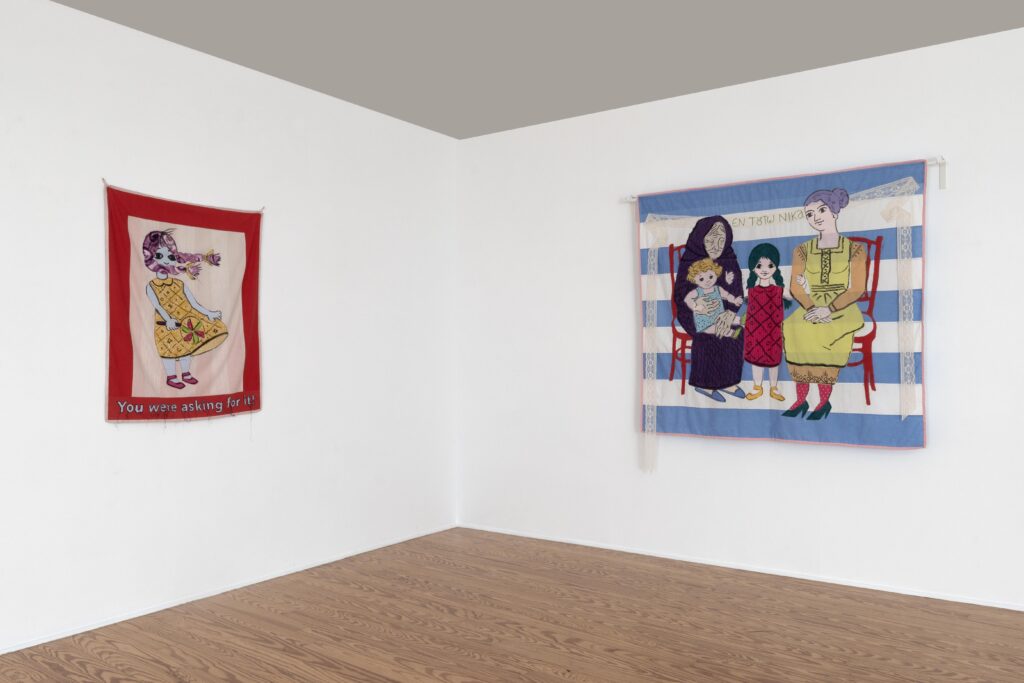
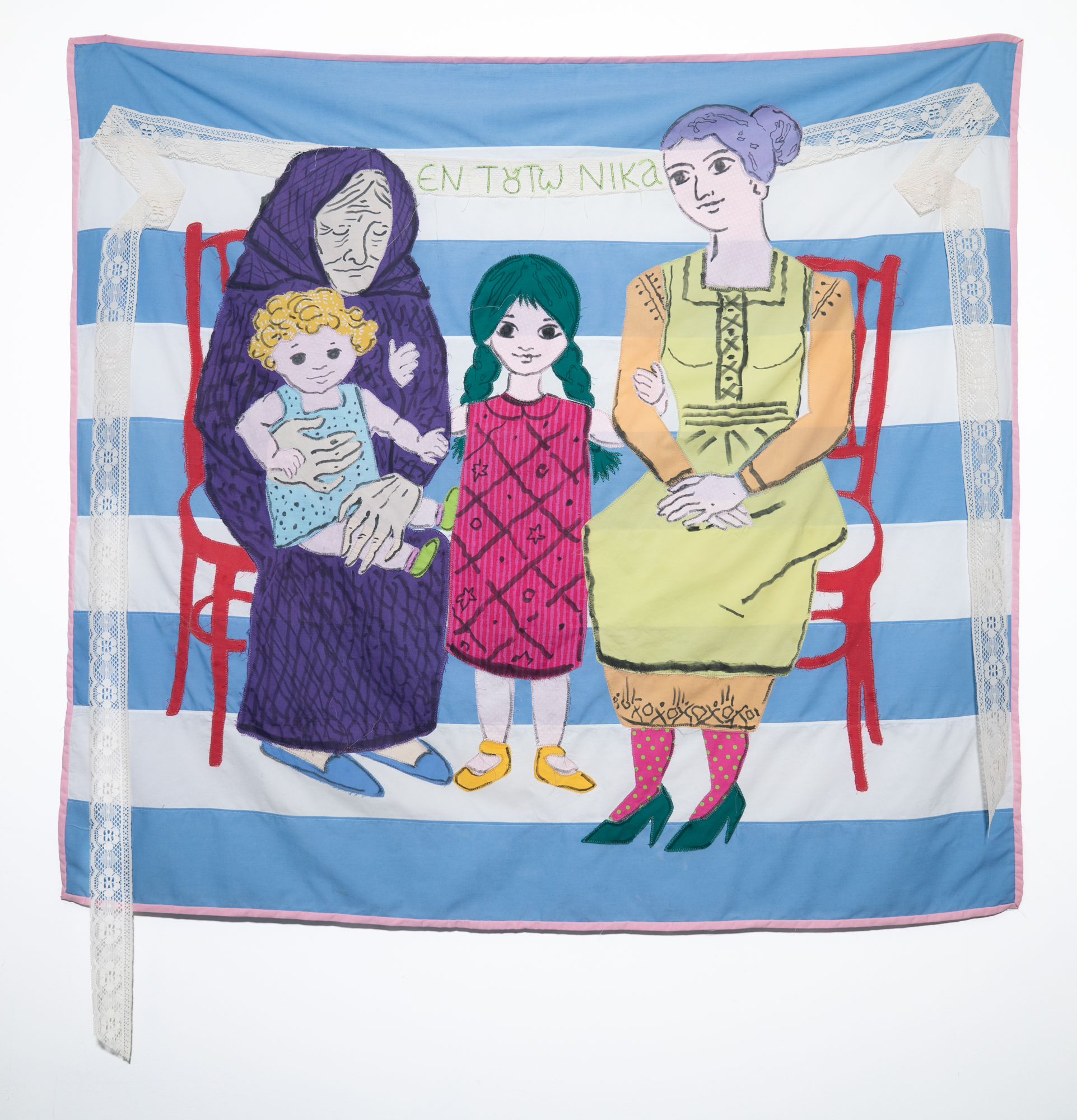
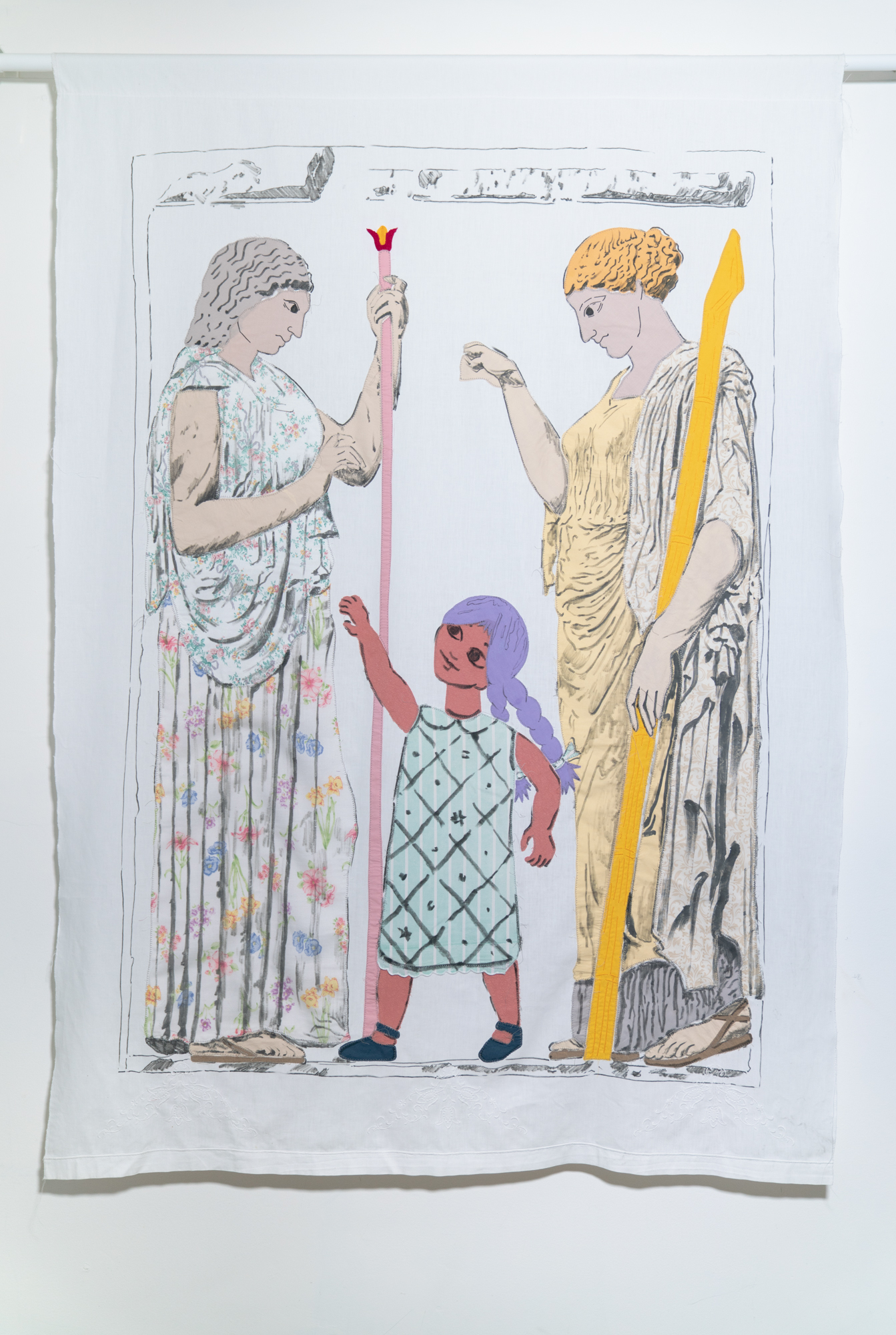
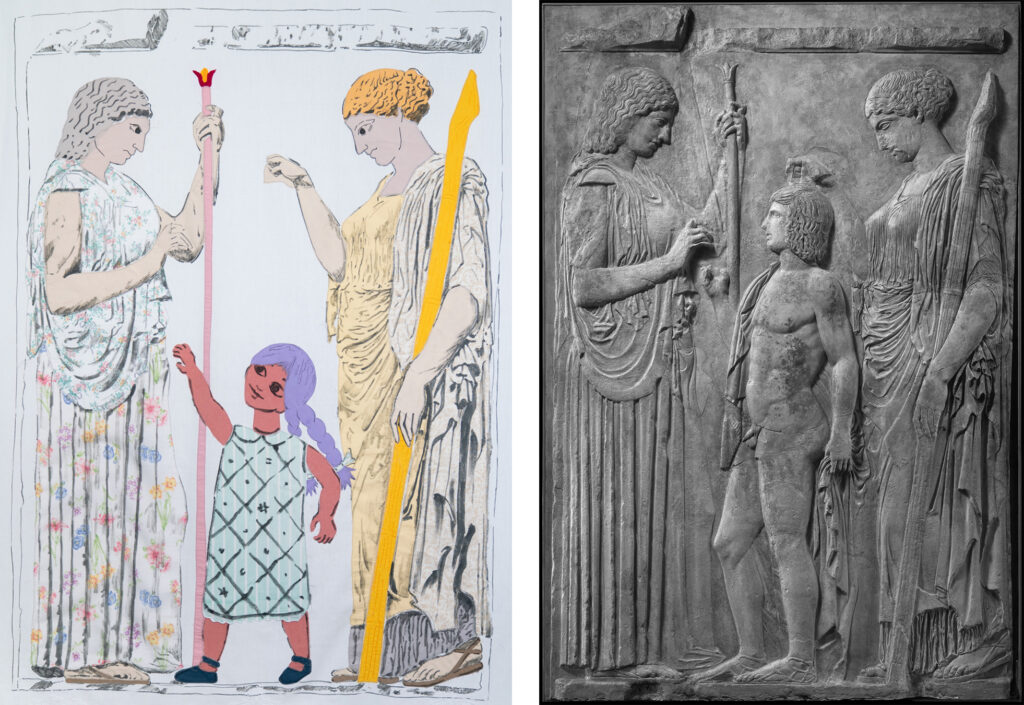
The exhibition “Εν Τούτω Νίκα” (In This Sign Conquer) invites us on a journey through time into the struggles and pain of women – guided by Anna, a figure from the first-grade Greek school book Alphavitario (1955).* Anna’s journey begins in antiquity and reaches the present day.
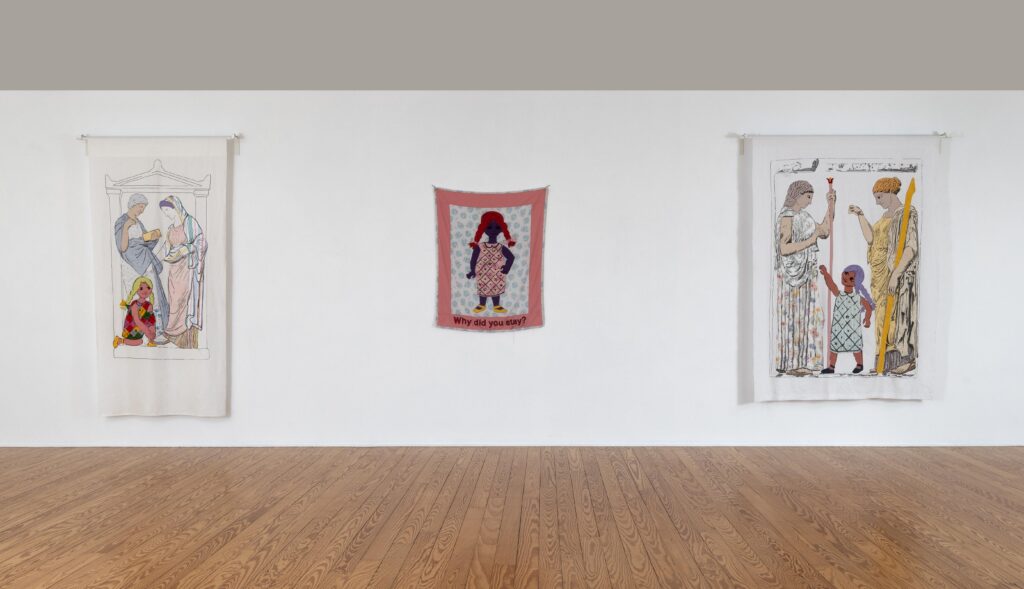
Using the visual language of ancient Greek grave steles, Lale traces Anna’s path from the Great Relief of the Eleusinian Mysteries (440–430 BC), where her pilgrimage is blessed by Demeter, the goddess of harvest and a victim of rape, and her daughter Persephone, the goddess of the Underworld and a victim of femicide. The journey with Anna continues through two funerary steles from the 5th and 4th centuries BC. On the “Stele of Ameinokleia”, Anna helps her mother prepare for her passage to the Underworld. In the work “Pieta”, we see Anna dead in her mother’s arms – a tribute to all mothers who lose their children, whether to the armed hand of a partner, to state negligence, or to the cruelty of war.
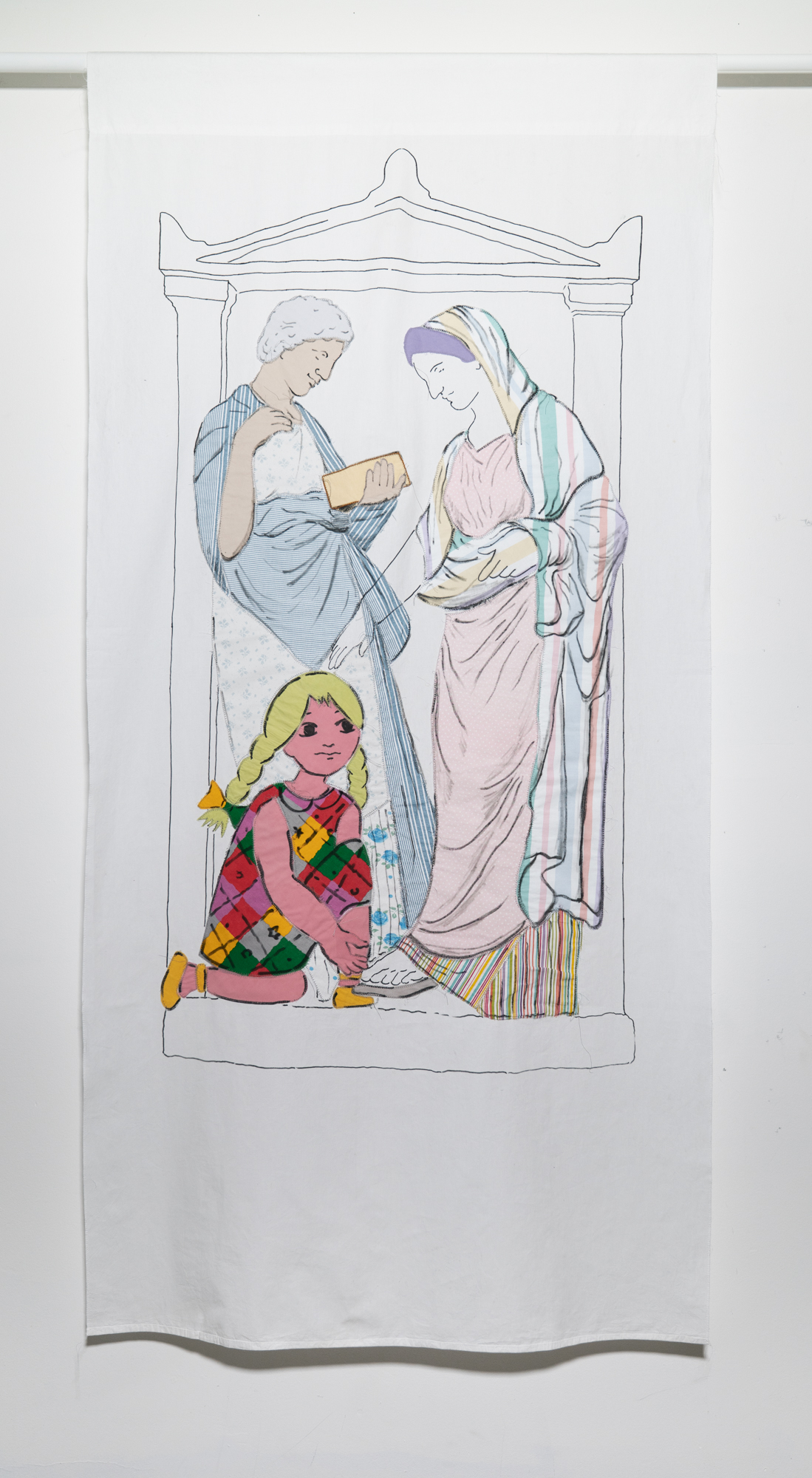
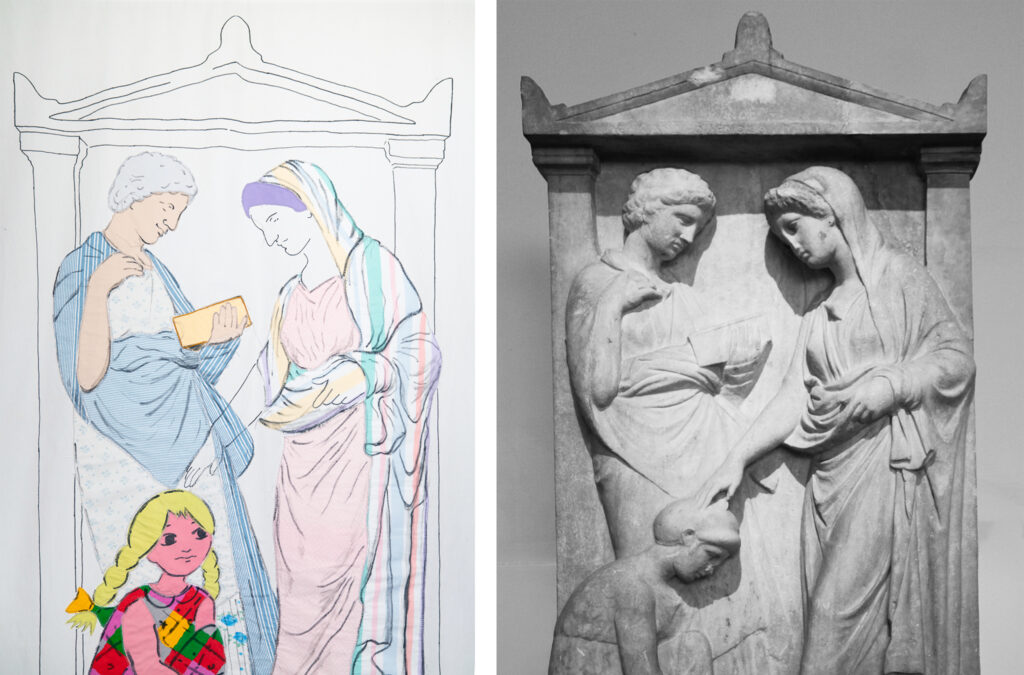
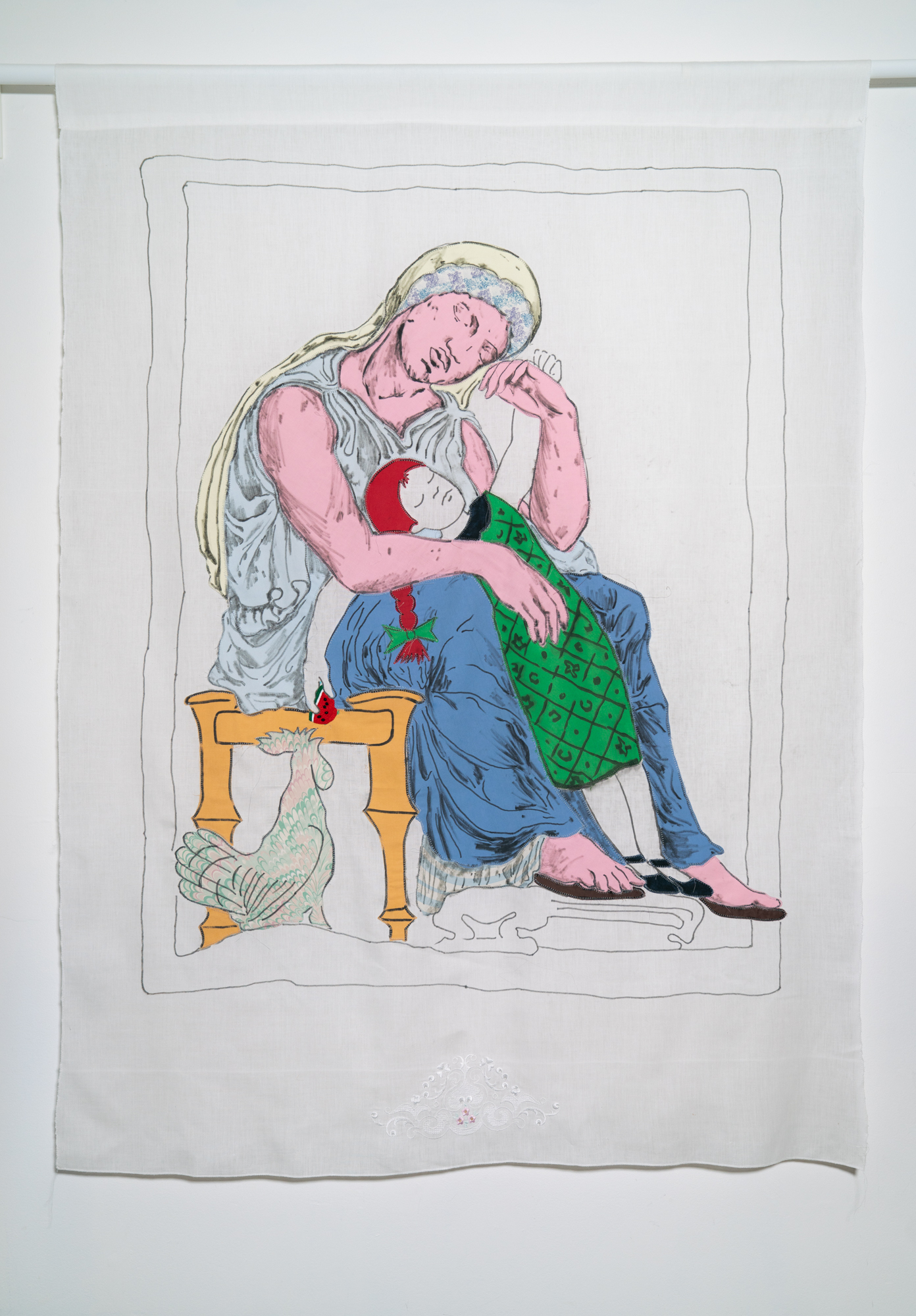
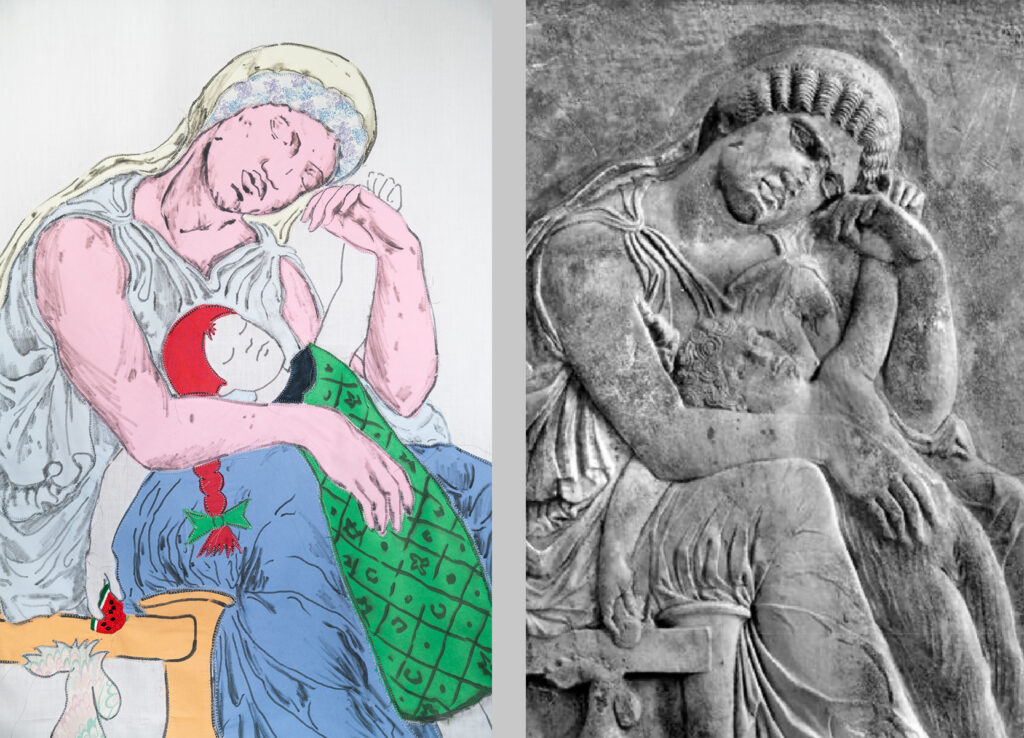
Through this journey, Anna – any Anna – witnesses and experiences the pain of loss, sexism, and the culture of victim blaming. At the same time, she learns that unity and solidarity can break the chains of silence and abuse. Holding tightly the hands of her grandmother and mother, she looks us straight in the eye and declares: “Εν Τούτω Νίκα!” – In this sign, conquer!
The works in the exhibition are created from bed sheets donated by women and feminine identifying individuals living in Greece, on the condition that they had rested upon them and dreamed of a just and safe world.
*The exhibition draws visual references from the Alfavitario, illustrated by K. Grammatikopoulos and published in 1955 by the Greek Ministry of Education.